
If you have ever been in the middle of a crucial live sports broadcast or the season finale of your favorite show, only to have the screen freeze into an endless buffering loop, you know the ultimate frustration of IPTV.
While many users immediately blame their internet connection or their streaming device, the root cause is often invisible: your Internet Service Provider (ISP) is actively slowing down your connection.
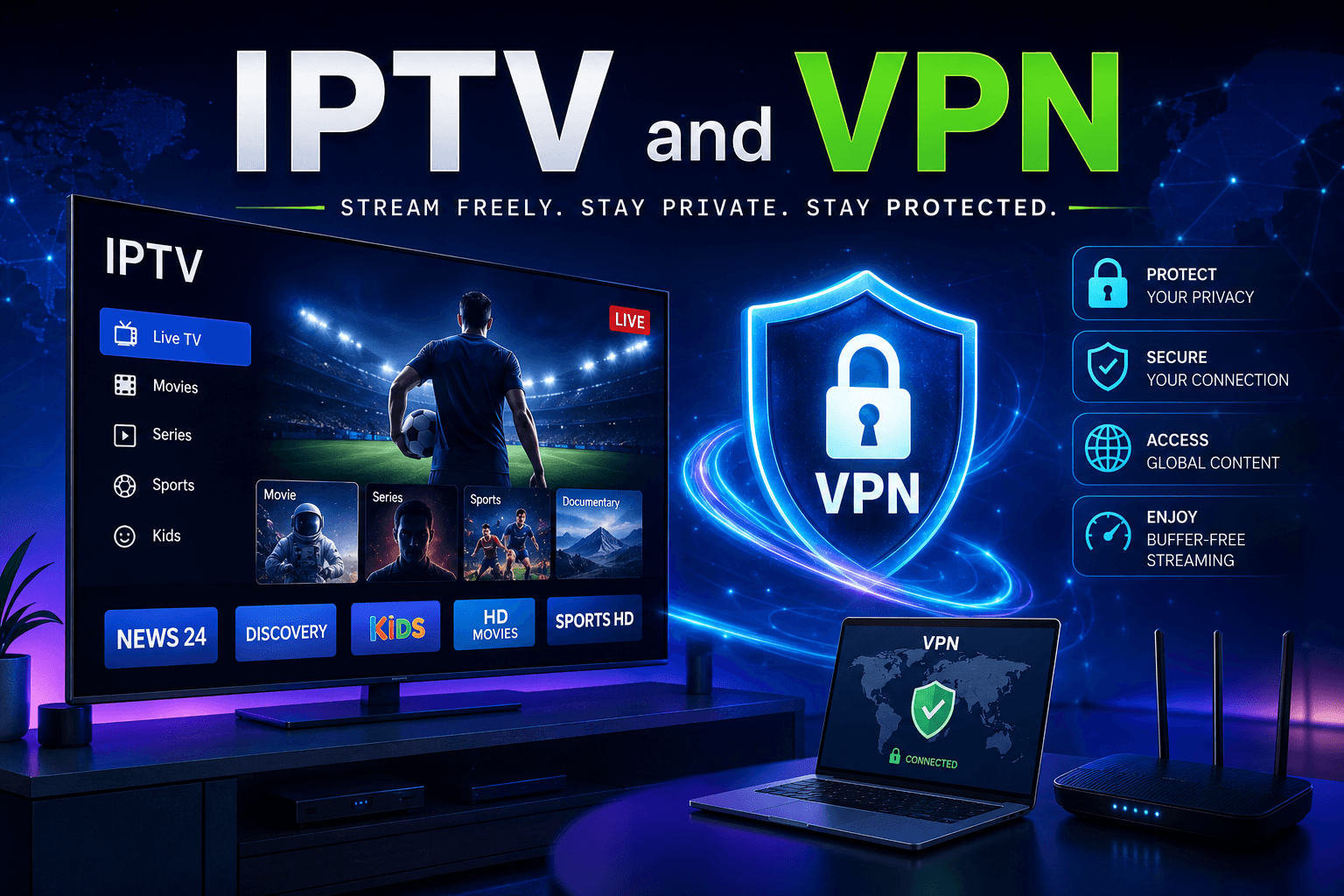
To achieve a buffer-free, secure, and unrestricted streaming experience, a Virtual Private Network (VPN) has shifted from being an optional tech accessory to an absolute necessity. In this guide, we will break down exactly why you need a VPN for IPTV, how it instantly solves buffering, and review the top standalone VPNs on the market.
We will also reveal a closely guarded industry secret: how to get a premium streaming experience where the VPN is already built directly into the server, requiring zero extra apps or monthly fees.
4 Reasons You Need a VPN for IPTV Streaming
A VPN creates a secure, encrypted tunnel between your device and the internet. When you connect to a VPN server, your real IP address is hidden, and your internet traffic becomes unreadable to outside observers. Here is exactly why this technology is vital for IPTV users.
1. Stop ISP Throttling and Eliminate Buffering
ISPs like Comcast, AT&T, and Spectrum constantly monitor the type of data flowing through their networks. When they detect high-bandwidth activities like 4K IPTV streaming or large file downloads they often deploy “bandwidth throttling.” This means they deliberately slow down your internet speed to reduce strain on their network, especially during peak hours or major live events.
Because a VPN encrypts your traffic, your ISP can only see that you are downloading data, not what that data is. If they cannot identify the traffic as a high-bandwidth video stream, they cannot selectively throttle it. For many users, simply turning on a VPN instantly cures chronic IPTV buffering.
2. Protect Your Personal Data and Privacy
The IPTV landscape is filled with thousands of third-party players, unverified apps, and varying server hosts. When you stream without a VPN, your actual IP address and location are exposed to the app developers and the server hosts.
A VPN routes your connection through an external server, replacing your real IP address with a highly secure, anonymous one. This prevents third parties from tracking your viewing habits, targeting you with localized ads, or mapping your physical location.
3. Unblock Geo-Restricted Live Streams and VODs
Content licensing laws frequently restrict who can watch what based on geographical location. This is especially prevalent in live sports, where “blackouts” prevent local fans from streaming a game that is being broadcast on a regional cable network.
By using a VPN, you can digitally relocate your device to almost anywhere in the world. If a Premier League match is blocked in your country, simply connect to a UK-based VPN server. To the streaming platform, you appear as a local viewer, granting you instant access to geo-restricted channels and Video on Demand (VOD) libraries.
4. Maintain High Speeds Safely
There is a common misconception that VPNs slow down your internet. While heavy encryption does add a small amount of overhead, modern VPN protocols like WireGuard and Lightway are engineered specifically for high-speed video processing. If your ISP is heavily throttling your base connection, routing your traffic through a high-speed VPN server will actually result in a faster, much more stable stream.
The Ultimate Solution: IPTV Servers with a Built-In VPN

Buying a third-party VPN subscription usually costs between $3 to $15 per month. You also have to install a separate app on your FireStick, Smart TV, or Android box, which eats up valuable storage space and requires you to remember to turn it on every time you watch TV.
There is a smarter, more cost-effective way.
Premium services like tuniptv.com have engineered a solution that eliminates the middleman entirely. Our premium IPTV servers come with military-grade VPN encryption built directly into the server infrastructure.
What this means for you:
-
Zero Extra Costs: You do not need to buy a separate subscription from NordVPN or ExpressVPN.
-
Zero Setup Required: There are no background apps to configure, no server locations to toggle, and no split-tunneling settings to manage.
-
Automatic ISP Evasion: The moment you connect to the service, your stream is already encrypted at the source. Your ISP cannot detect or throttle the traffic.
-
Optimized Routing: Because the encryption happens on the server side, it doesn’t drain the processing power of your FireStick or Android box, keeping your device running fast and cool.
If you are looking for the ultimate plug-and-play solution that protects your privacy and guarantees high speeds out of the box, upgrading to a server with integrated encryption is the smartest move you can make.
Running an IPTV service on a bare, unencrypted connection in 2026 is a guaranteed recipe for buffering, tracking, and frustration. Whether you choose to invest in a standalone privacy tool like NordVPN or opt for the seamless, built-in encryption provided by premium servers like tuniptv.com, securing your connection is the single most important step to achieving flawless streaming.